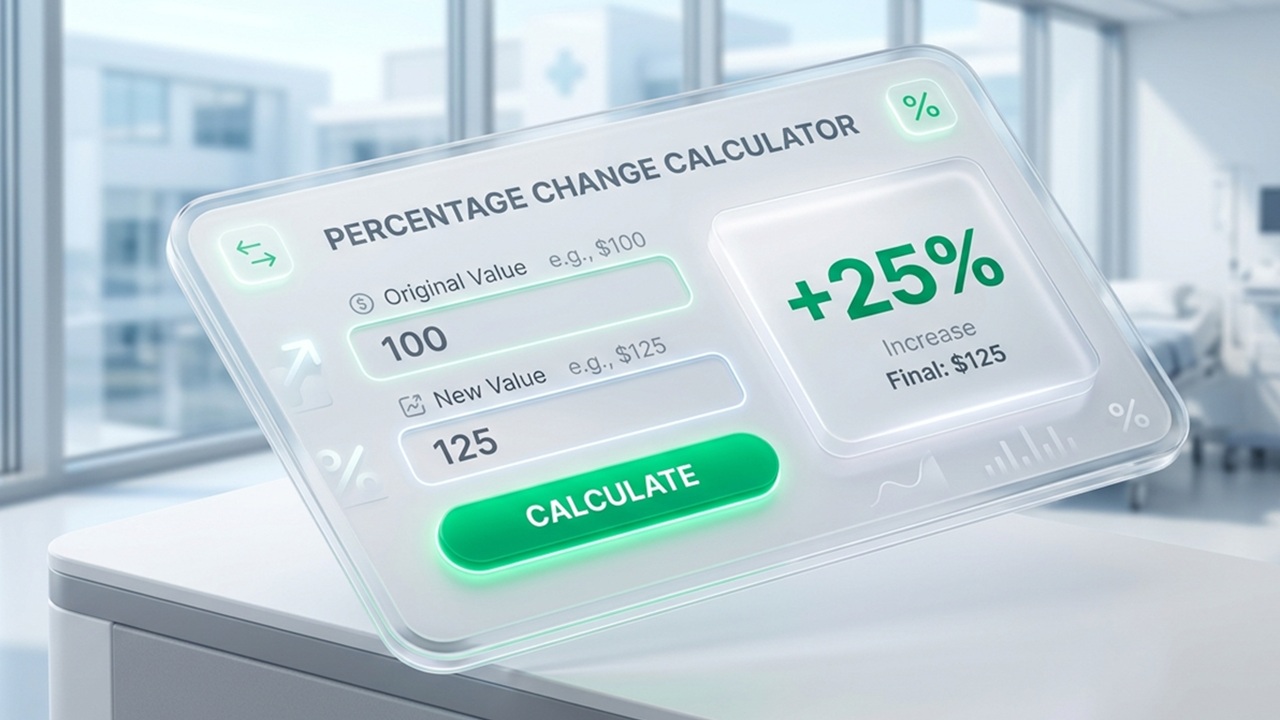
Making sense of numbers is a big part of everyday life. Whether you are tracking your savings, comparing prices, analyzing business growth, or even monitoring fitness progress, understanding percentage change can give you a clear edge. It is one of those simple concepts that quietly powers smarter decisions.
A percentage change calculator takes the guesswork out of this process. Instead of manually calculating increases or decreases, you can quickly see how much something has changed in relative terms. This guide walks you through everything you need to know, from the basic formula to real life applications that actually matter.
What is Percentage Change
Percentage change measures how much a value has increased or decreased compared to its original value. It expresses the difference as a percentage, making it easier to compare changes across different numbers.
For example, if your monthly income increases from 20000 to 25000, the change is not just 5000. The percentage change tells you how significant that increase is relative to where you started.
This is why percentage change is more useful than just looking at raw numbers. It puts everything into context.
Percentage Change Formula Explained
At its core, the formula for percentage change is simple:
Percentage Change = (New Value minus Old Value) divided by Old Value multiplied by 100
Let’s break that down in plain language:
You subtract the old value from the new value to find the difference. Then you divide that difference by the original value. Finally, you multiply by 100 to convert it into a percentage.
Example
Suppose a product price increases from 500 to 650.
Difference = 650 minus 500 = 150
Divide by original value = 150 divided by 500 = 0.3
Multiply by 100 = 30 percent
So, the price increased by 30 percent.
Percentage Increase vs Decrease
Not all changes are positive. Sometimes values go down, and that matters just as much.
Percentage Increase
When the new value is higher than the old value, the result is positive. This indicates growth or improvement.
Example:
Old value = 100
New value = 120
Percentage change = 20 percent increase
Percentage Decrease
When the new value is lower than the old value, the result is negative. This shows a decline.
Example:
Old value = 100
New value = 80
Percentage change = minus 20 percent, meaning a 20 percent decrease
Understanding the direction of change is just as important as the magnitude.
Why Use a Percentage Change Calculator
You can calculate percentage change manually, but a calculator saves time and reduces errors. More importantly, it allows you to focus on interpreting the result instead of worrying about the math.
Here are some situations where a calculator becomes especially useful:
Financial Planning
Tracking income growth, investment returns, or monthly expenses becomes much easier. Instead of guessing whether your savings are improving, you can measure the exact percentage change.
Business Decisions
If you run a business, percentage change helps you analyze sales performance, customer growth, and profit margins. A small change in numbers can reveal bigger trends when expressed as a percentage.
Shopping and Discounts
Ever wondered if a discount is actually worth it? Comparing percentage reductions helps you quickly decide whether a deal is good or just marketing.
Fitness Tracking
If you are working on weight loss or muscle gain, percentage change gives you a clearer picture of your progress over time.
Real Life Examples That Make It Click
Sometimes formulas feel abstract until you see how they apply in real situations.
Salary Growth
Imagine your salary increases from 30000 to 36000.
Difference = 6000
Percentage change = 6000 divided by 30000 multiplied by 100 = 20 percent
That means your income grew by 20 percent, which is a strong increase.
Stock Market Example
You buy a stock at 100 and sell it at 115.
Your profit is 15, but the percentage change is 15 percent. This helps you compare it with other investments more effectively.
Price Drop
A smartphone price drops from 20000 to 15000.
Difference = minus 5000
Percentage change = minus 25 percent
This tells you the price has decreased by a quarter of its original value.
Common Mistakes to Avoid
Even though percentage change is simple, small mistakes can lead to wrong conclusions.
Using the Wrong Base Value
Always divide by the original value, not the new one. This is one of the most common errors.
Ignoring Negative Signs
A negative result indicates a decrease. Ignoring this can completely flip the meaning of your calculation.
Confusing Percentage Change with percentage decrease calculator
Percentage change compares a new value to an old one. Percentage difference compares two values without considering which one came first. They are not the same.
Tips for Smarter Decision Making
Understanding percentage change is useful, but using it wisely is what really makes a difference.
Look Beyond the Numbers
A high percentage increase might look impressive, but if the starting value was very small, the actual impact may be limited.
Compare Similar Data
Always compare percentage changes within similar categories. Comparing unrelated data can lead to misleading conclusions.
Use It Consistently
If you are tracking progress over time, stick to percentage change as your metric. This creates a consistent way to measure growth or decline.
How a Percentage Change Calculator Works
Most online calculators are straightforward. You simply enter the original value and the new value, and the tool does the rest.
Behind the scenes, it applies the same formula discussed earlier. The benefit is speed and accuracy, especially when you are dealing with multiple calculations.
Some advanced calculators also show whether the result is an increase or decrease automatically, making it even easier to interpret.
When Percentage Change Matters Most
There are moments when understanding percentage change is not just helpful but essential.
Budgeting
Tracking monthly expenses in percentage terms helps you identify areas where spending is rising too quickly.
Investments
Investors rely heavily on percentage change to evaluate returns and risks. It helps compare different assets on a level playing field.
Business Growth
Entrepreneurs often measure success using percentage growth in revenue, customers, or profits.
Academic and Data Analysis
Students and professionals use percentage change to interpret data trends and draw meaningful conclusions.
Final Thoughts
A percentage difference calculator is more than just a tool. It is a simple way to bring clarity to numbers that might otherwise feel confusing or overwhelming.
Once you understand how percentage change works, you start noticing it everywhere. From price tags to performance reports, it becomes a natural part of how you evaluate information.
The real advantage is not just in calculating percentages but in using them to make better decisions. Whether you are managing money, running a business, or just trying to be more informed, this small concept can have a big impact.
Take a few minutes to practice with real numbers from your daily life. The more you use it, the more intuitive it becomes. And over time, you will find yourself making decisions with greater confidence and clarity.