Category: BLOG

  • Website Rules and Guidelines Every User Must Follow

    Website Rules and Guidelines Every User Must Follow

    When people visit a website, they often focus on content, tools, or services without paying much attention to the rules that shape the entire experience. Behind every smooth interaction is a set of guidelines designed to protect users, maintain quality, and ensure fairness for everyone involved.

    Whether you run a website or simply use one regularly, understanding these rules is not just helpful, it is essential. Clear website guidelines create trust, prevent misuse, and help build a space where users feel safe and respected.

    This guide explains the most important website rules and terms every user should follow, written in a simple and human way so anyone can understand and apply them in real situations.

    Why Website Rules Matter More Than You Think

    Rules

    At first glance, website rules may seem like formal text that people scroll past. In reality, they serve as the foundation of how a platform operates.

    Imagine a website without rules. Anyone could post harmful content, misuse features, or exploit other users. Over time, the platform would lose credibility and users would leave.

    Rules help prevent this by setting expectations. They tell users what is allowed, what is not, and what happens if someone crosses the line.

    More importantly, they create consistency. When everyone follows the same standards, the experience becomes predictable and reliable.

    Respectful Behavior Is the First Rule

    Every website that allows interaction between users depends on one simple principle respect.

    This means avoiding offensive language, harassment, or personal attacks. It also includes respecting different opinions, even when you disagree.

    A healthy online environment does not mean everyone thinks the same way. It means people can express ideas without fear of being insulted or targeted.

    For example, if a user leaves a comment you disagree with, the right approach is to respond calmly or simply ignore it. Escalating into arguments rarely helps and often violates platform rules.

    Respect builds communities. Disrespect destroys them.

    Honest Use of Content and Information

    One of the most common issues online is misuse of content. This includes copying someone else’s work, spreading false information, or using misleading titles to attract attention.

    Most websites clearly state that users must provide accurate and original content. This rule protects both creators and readers.

    If you are sharing information, make sure it is correct. If you are using someone else’s work, give proper credit. If the platform does not allow reuse, avoid it completely.

    Honesty also applies to personal details. Creating fake accounts or impersonating someone else is strictly against most website policies and can lead to permanent bans.

    Privacy and Data Protection Responsibilities

    In today’s digital world, privacy is not optional. It is a basic expectation.

    Users should never share sensitive personal information such as phone numbers, addresses, or financial details in public areas of a website. Even if the platform is secure, other users may not be.

    At the same time, websites often collect certain data to improve services. This is usually explained in their privacy policy.

    As a user, it is your responsibility to read these policies and understand how your data is used. Avoid platforms that are unclear about data handling or ask for unnecessary information.

    Respecting privacy is not just about protecting yourself. It is also about protecting others by not sharing their information without permission.

    Proper Use of Website Features

    Every website offers features designed for a specific purpose. Misusing them can disrupt the experience for others.

    For example, comment sections are meant for discussion, not spam. Search tools are meant to help users find information, not manipulate rankings. Messaging systems are meant for communication, not harassment.

    Abuse of features can include actions like posting repetitive content, sending unwanted messages, or trying to exploit system weaknesses.

    Most platforms monitor such behavior and take action when necessary. This can range from warnings to account suspension.

    Using features the right way ensures that everyone benefits from them.

    No Spam or Misleading Activities

    Spam is one of the fastest ways to ruin a website experience. It clutters content, distracts users, and reduces trust.

    This includes posting irrelevant links, excessive promotions, or duplicate content across multiple sections.

    Misleading activities go a step further. These include fake offers, clickbait titles, or deceptive practices designed to trick users.

    Websites take these violations seriously because they directly affect user trust. If a platform becomes known for spam, people stop using it.

    As a user, always aim to add value. If your content does not help, inform, or entertain, it probably does not belong.

    Follow Legal and Ethical Standards

    Website rules are not separate from real world laws. In many cases, they reflect them.

    Users must avoid illegal activities such as sharing pirated content, engaging in fraud, or promoting harmful behavior.

    Even if something seems minor, like downloading copyrighted material without permission, it can still have consequences.

    Ethical behavior is just as important. This includes being transparent, avoiding manipulation, and treating others fairly.

    A good rule of thumb is simple if something would be wrong offline, it is likely wrong online as well.

    Account Responsibility and Security

    When you create an account on a website, you are responsible for everything that happens under it.

    This means keeping your login details secure and not sharing them with others. If someone else gains access to your account and violates rules, you may still be held responsible.

    Use strong passwords and update them regularly. Enable additional security features if available.

    Also, avoid creating multiple accounts to bypass restrictions. This is a common violation and is usually detected quickly.

    Your account is your identity on the platform. Protect it.

    Consequences of Breaking the Rules

    Rules are only effective when they are enforced.

    Most websites follow a clear process when dealing with violations. It usually starts with a warning. If the behavior continues, the platform may restrict features or suspend the account.

    In serious cases, users can be permanently banned.

    Some platforms also remove content that violates guidelines without notice. This can include posts, comments, or uploaded files.

    Understanding the consequences helps users make better choices and avoid unnecessary issues.

    How to Stay Compliant Without Stress

    Following website rules does not require constant effort. It becomes natural once you understand the basics.

    Before posting or interacting, ask yourself a few simple questions

    Is this respectful
    Is this accurate
    Does this add value
    Does this follow the platform guidelines

    If the answer is yes, you are on the right track.

    It also helps to spend a few minutes reading the terms of use when joining a new platform. While it may seem time consuming, it can save you from problems later.

    The Human Side of Online Guidelines

    Behind every rule is a real purpose. These are not random restrictions created to limit users. They are designed to create a better experience for everyone.

    Think about the websites you enjoy using. They are likely clean, helpful, and easy to navigate. That does not happen by accident. It is the result of well defined rules and users who follow them.

    On the other hand, platforms with weak or ignored guidelines often become chaotic and unreliable.

    In many ways, following website rules is similar to basic social behavior. It is about being aware of others, acting responsibly, and contributing positively.

    Final Thoughts

    Website rules and guidelines are more than just formal statements. They are the backbone of any online platform.

    By following them, users help create a space that is safe, useful, and enjoyable for everyone.

    You do not need to memorize every detail. Focus on the core principles respect, honesty, responsibility, and awareness.

    When these values guide your actions, you naturally stay within the rules.

  • Meaning of Numbers 2 and 3 Explained Simply

    Meaning of Numbers 2 and 3 Explained Simply

    Numbers are everywhere. From the time we wake up and check the clock to the moment we count steps or track money, numbers quietly guide our day. Among all numbers, 2 and 3 might look simple at first, but they carry deep meaning, practical uses, and even a bit of personality if you look closely.

    Let’s explore these two numbers in a way that feels natural, useful, and easy to connect with.

    What Does the Number 2 Really Mean

    Numbers

    The number 2 is often linked with balance, partnership, and connection. Think about it. Many things in life come in pairs. Eyes, hands, shoes, and even ideas like day and night or right and wrong.

    At its core, 2 represents togetherness.

    In everyday life, this shows up in relationships. Whether it is friendship, marriage, or teamwork, the number 2 reflects cooperation. It reminds us that working with someone often leads to better results than working alone.

    In numerology, which is the study of numbers and their meanings, 2 is seen as a symbol of harmony and sensitivity. People who feel connected to this number are often good listeners and peacemakers. They prefer calm environments and try to avoid conflict.

    Even in math, 2 plays a special role. It is the smallest and only even prime number. That alone makes it unique. It is also the foundation of binary code, which powers computers and digital systems. Every app, website, and game you use depends on a system built using 0 and 1, but the idea of pairing and sequencing is rooted in the concept of 2.

    Common Uses of the Number 2

    You might not notice it, but 2 appears in many practical situations:

    Cooking often involves doubling or halving recipes, which relies on the number 2
    Sports teams often work in pairs during training or strategy building
    In music, harmony often comes from two notes played together
    In design, balance is created using symmetry, which often involves dividing things into two parts

    Even decision making often comes down to two choices. Yes or no. Go or stay. Buy or wait.

    This simple number helps structure choices and keeps things clear.

    Fun Facts About Number 2

    Here are a few interesting things about the number 2 that many people do not realize:

    It is the only even prime number
    In many cultures, 2 represents duality like light and dark
    The human brain has two hemispheres, each responsible for different types of thinking
    In storytelling, conflict often arises between two opposing forces

    The more you look at it, the more you see that 2 is not just a number. It is a pattern in life.

    What Does the Number 3 Represent

    Now let’s move to the number 3, which feels completely different from 2.

    While 2 is about balance, 3 is about creativity, growth, and expression.

    If you think about storytelling, most stories follow a three part structure. Beginning, middle, and end. This pattern feels natural because our brains like completeness, and 3 gives that sense.

    In numerology, 3 is associated with energy, imagination, and communication. People who connect with this number are often expressive. They enjoy sharing ideas, telling stories, or creating something new.

    There is also something satisfying about things that come in threes. It feels complete without being overwhelming.

    Everyday Uses of the Number 3

    The number 3 is everywhere once you start noticing it:

    Traffic lights use three colors to control movement
    Basic geometry starts with three sides forming a triangle
    Speeches often use three main points to stay clear and memorable
    Jokes often follow a pattern of three for better timing

    Even in daily routines, we often group things in threes. Morning, afternoon, and evening. Past, present, and future.

    This number brings structure while still allowing creativity.

    Fun Facts About Number 3

    The number 3 has some fascinating qualities:

    It is the first odd prime number after 2
    A triangle is the strongest shape in engineering and it has three sides
    Many cultures see 3 as a lucky number
    In language, repetition in threes is more powerful and memorable

    For example, phrases like try try try or stop look listen follow this natural rhythm.

    Comparing Number 2 and Number 3

    Although both numbers are small, they represent very different ideas.

    Number 2 is about connection and balance
    Number 3 is about expansion and creativity

    If you imagine building something, 2 helps you create a stable base, while 3 helps you expand and add life to it.

    For example, in a team setting, two people can collaborate effectively, but adding a third person often brings new ideas and energy. That is where growth happens.

    In design, two elements create balance, while three elements create movement and interest.

    So instead of seeing them as just numbers, it helps to think of them as stages.

    2 is stability
    3 is growth

    Why These Numbers Matter More Than You Think

    At first glance, learning about numbers 2 and 3 might feel basic, but these numbers shape how we think and organize the world.

    They influence:

    How we communicate
    How we build relationships
    How we solve problems
    How we design systems

    Even in education, children first learn counting with small numbers like 2 and 3. These numbers form the foundation for understanding more complex ideas later.

    If you skip the basics, the advanced concepts feel harder. That is why these numbers matter more than they seem.

    Numbers 2 and 3 in Culture and Beliefs

    Across different cultures, these numbers carry symbolic meanings.

    Number 2 is often linked with partnership and unity. In many traditions, it represents the idea of two becoming one, especially in marriage or strong partnerships.

    Number 3 is often seen as a complete number. Many spiritual traditions refer to three levels or three forces. It represents a cycle that feels whole.

    Even in daily sayings, you will notice patterns based on these numbers. Two sides of a story. Third time is the charm.

    These expressions exist because they reflect how people naturally understand the world.

    Learning Numbers in a Simple Way

    If you are teaching someone about numbers or even revisiting the basics yourself, starting with 2 and 3 is a smart move.

    You can explain 2 by showing pairs. Two apples, two hands, two shoes. This makes it easy to understand.

    For 3, you can use grouping. Three colors, three steps, three parts of a story.

    This kind of learning feels natural because it connects numbers with real life experiences.

    Practical Examples You Can Relate To

    Let’s bring everything together with a few real life examples.

    Imagine you are planning a small project.

    With 2 people, tasks are divided and communication is simple
    With 3 people, ideas expand and creativity increases

    Or think about making a decision.

    With 2 options, the choice is clear
    With 3 options, you have more flexibility but also more thinking involved

    These examples show how numbers shape decisions without us even realizing it.

    Final Thoughts

    Numbers 2 and 3 may look small, but they carry big meaning. They influence how we think, how we connect, and how we create.

    The number 2 teaches balance, partnership, and harmony. It reminds us that working together often leads to better outcomes.

    The number 3 brings creativity, growth, and expression. It pushes us to expand ideas and explore new possibilities.

  • User Comments and Feedback Guide for Better Engagement

    User Comments and Feedback Guide for Better Engagement

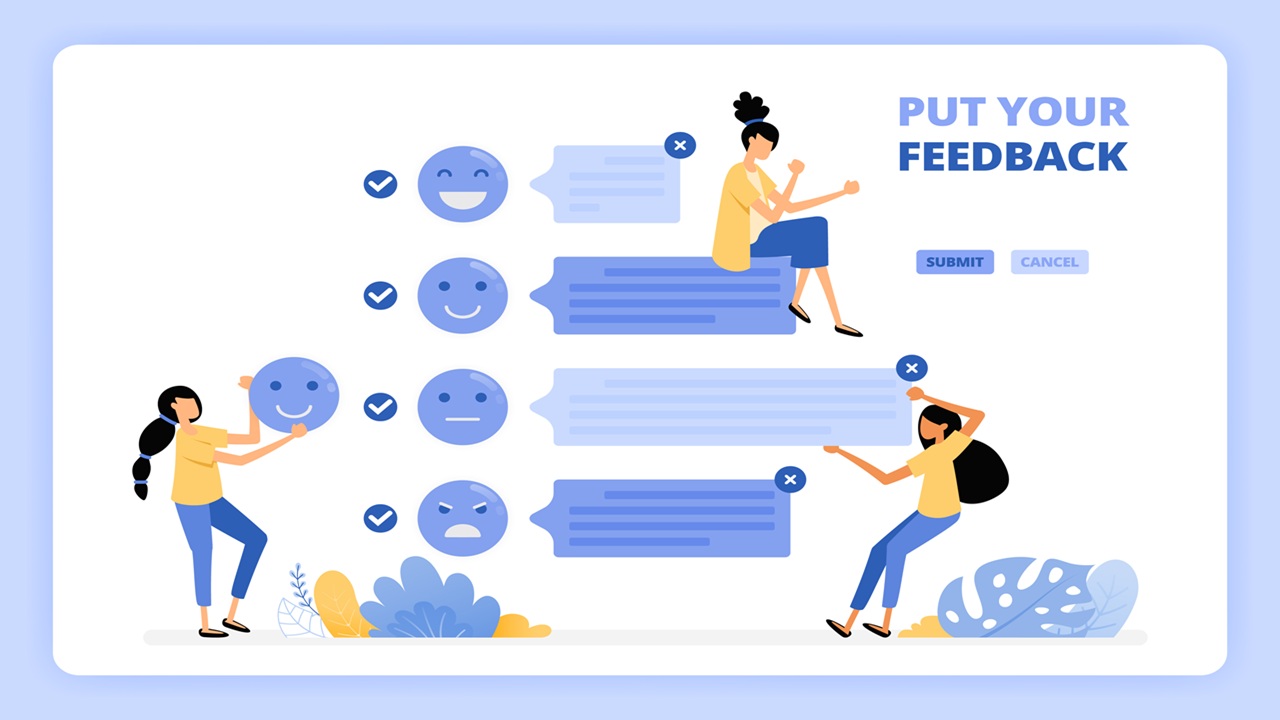
    When people visit a website, they rarely want to feel like they are reading something static or one sided. They want to react, question, agree, disagree, and sometimes even share their own experience. This is where user comments and feedback become more than just a feature. They turn into a living layer of your content.

    If you think about the websites you trust the most, chances are they allow people to leave comments or share opinions. That simple interaction builds credibility. It shows that the content is open to discussion and not just pushing information without accountability.

    In this section, we will explore why user comments matter, how they impact search visibility, and how you can encourage meaningful feedback that actually improves your platform.

    Why User Comments Matter More Than You Think


    User comments are not just small notes left at the bottom of a page. They are signals. Signals that your content is being read, understood, and reacted to.

    Search engines notice this activity. When people spend more time on a page, scroll through comments, and even add their own thoughts, it increases engagement metrics. These signals can indirectly improve rankings because they show that the content is useful and relevant.

    From a human perspective, comments make your content feel real. Imagine reading an article with zero reactions. It feels empty. Now imagine the same article with thoughtful discussions below it. Suddenly, it becomes more trustworthy.

    Comments also bring different viewpoints. Sometimes readers explain things in simpler ways than the original content. Sometimes they share real life examples. This adds depth without you having to rewrite the entire article.

    The Role of Feedback in Content Improvement

    Feedback is one of the most honest ways to understand what works and what does not.

    Not every visitor will send you an email or contact you directly. Most will simply leave. But a small percentage will take the time to share what they liked or what confused them. That feedback is valuable.

    For example, if multiple users say that a section is unclear, that is a strong signal to improve it. If users appreciate a specific part, you know what to focus on in future content.

    Instead of guessing what your audience wants, feedback gives you direct answers.

    You can think of it as a continuous improvement loop. You publish content. Users react. You refine. Over time, your content becomes sharper, clearer, and more useful.

    Building Trust Through Open Conversations

    Trust is not built overnight. It grows through transparency and interaction.

    When users see that comments are allowed and responses are visible, it shows that the platform is open to discussion. It also shows confidence in the content.

    Responding to comments is equally important. A simple reply can make a user feel heard. It turns a one time visitor into someone who might return.

    Even negative feedback has value. It shows authenticity. A page with only perfect reviews often feels unrealistic. Balanced feedback feels more genuine.

    The key is not to avoid criticism but to handle it with clarity and respect.

    How Comments Improve SEO Performance

    Search engines aim to deliver the most useful and relevant results. User generated content plays a role in that.

    When users leave comments, they often use natural language. They ask questions, add details, and sometimes include keywords that you may not have covered. This expands the content organically.

    Comments also keep a page fresh. Instead of being static, the page continues to update as new responses are added. This ongoing activity can signal relevance.

    Another factor is dwell time. If visitors spend more time reading comments or participating in discussions, it indicates engagement. While not a direct ranking factor, it contributes to overall performance.

    Encouraging Users to Share Their Thoughts

    Getting users to comment is not always easy. Most people read and leave. You need to gently encourage interaction without forcing it.

    Start with a simple invitation. Ask readers what they think. A clear and friendly prompt can make a big difference.

    For example, instead of ending an article abruptly, add a section that invites opinions. Ask questions related to the topic. Keep it natural.

    Make the process easy. If commenting requires too many steps, users will skip it. A simple form works best.

    You can also highlight existing comments. When new visitors see active discussions, they are more likely to join.

    Creating a Safe and Respectful Space

    Not all comments are helpful. Some may be spam, irrelevant, or even harmful. Managing this is part of maintaining a healthy community.

    Set clear guidelines. Let users know what kind of comments are acceptable. Keep it simple and easy to understand.

    Moderation is important. Remove spam and filter out content that adds no value. This keeps the discussion clean and useful.

    At the same time, avoid over controlling. People should feel free to express their opinions. Balance is key.

    Turning Feedback into Action

    Collecting feedback is only the first step. The real value comes from using it.

    Review comments regularly. Look for patterns. Are users asking similar questions? Are they pointing out the same issues?

    Use this information to update your content. Add clarifications, expand sections, or improve explanations.

    You can also create new content based on feedback. If a topic keeps coming up in comments, it is worth exploring in detail.

    This approach keeps your content aligned with what your audience actually wants.

    Real Human Touch Makes the Difference

    People can easily tell when something feels robotic. That applies to both content and responses.

    When replying to comments, keep your tone natural. You do not need to sound overly formal. A simple and clear response works best.

    Acknowledge the user’s input. If someone shares an experience, respond to it. If they ask a question, answer it directly.

    Small details matter. Even a short reply can build connection.

    Common Mistakes to Avoid

    Many websites add a comment section but fail to use it effectively.

    One common mistake is ignoring comments. If users take the time to write and receive no response, they are less likely to return.

    Another mistake is allowing spam to take over. This reduces trust and makes the page look unprofessional.

    Over moderation can also be a problem. Removing every critical comment makes the platform look biased.

    The goal is to maintain a balance where genuine discussions can grow.

    How Feedback Shapes Long Term Growth

    Over time, feedback becomes a powerful resource. It tells you what your audience values.

    Instead of relying on assumptions, you build your content strategy around real insights.

    This leads to better engagement, stronger trust, and improved search visibility.

    It also creates a sense of community. Users feel like they are part of something rather than just visitors.

    Simple Ways to Get Started

    If you are not currently using comments or feedback, start small.

    Add a comment section to your pages. Include a short prompt asking for thoughts.

    Respond to the first few comments to set the tone. Show that interaction is welcome.

    Monitor feedback and use it to refine your content.

    Over time, this simple feature can transform how users interact with your platform.

    Final Thoughts

    User comments and feedback are often underestimated. They may seem like a small addition, but their impact is significant.

    They improve engagement, build trust, and provide insights that no analytics tool can fully capture.

    More importantly, they bring a human element to your content. They turn a one way message into a conversation.